
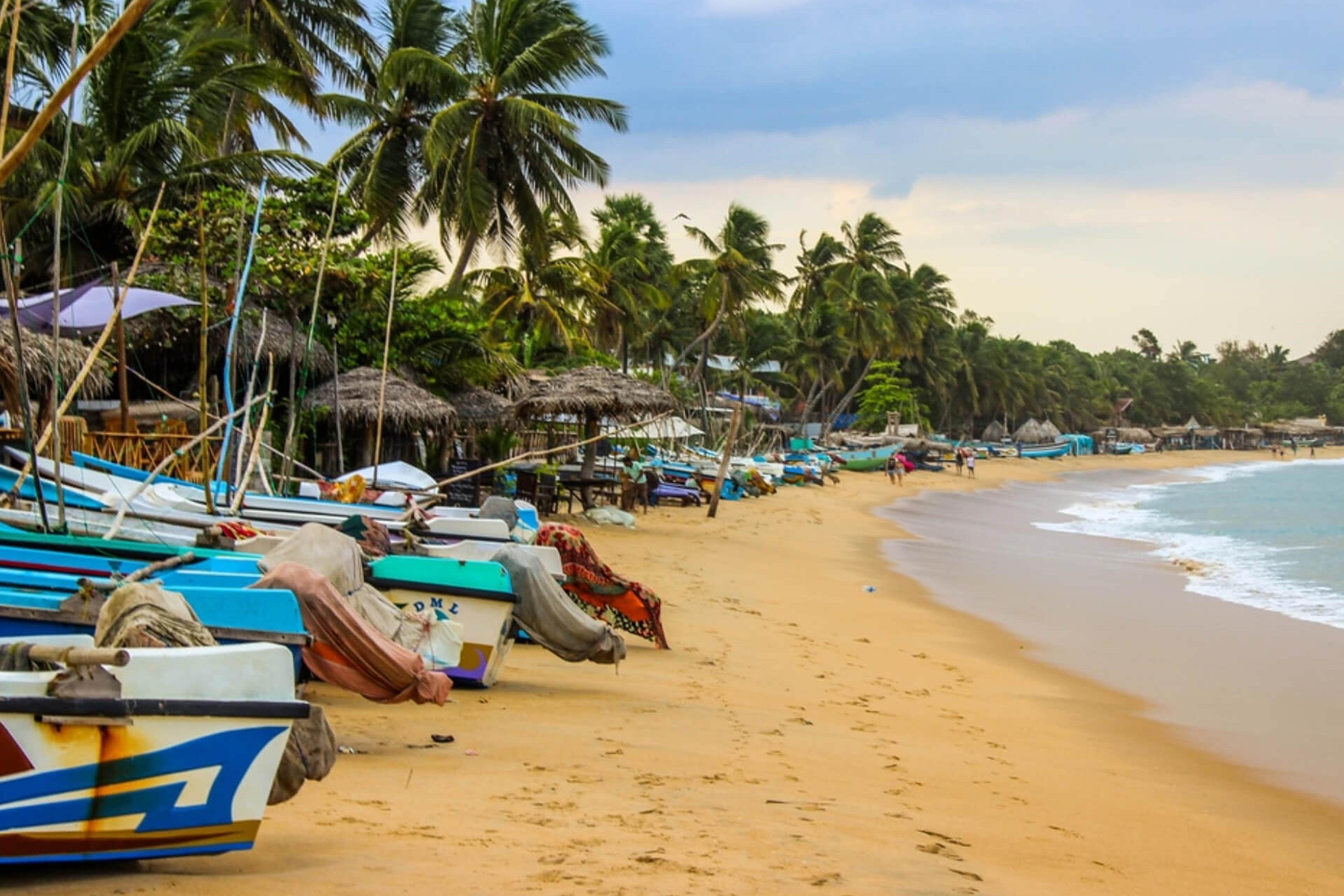
Arugam Bay, Sri Lanka: The Wave That Built a Legend
Arugam Bay's right-hand point break is consistently ranked among the best in Asia, and the town around it has grown up almost entirely in service of that fact: surf schools, board shapers, and a string of low-rise guesthouses and cafes strung along the single road that runs the length of the bay. What keeps Arugam Bay distinct from its south coast equivalents is its remoteness. Arugam Bay is the east coast's answer to everything the south coast surf towns have become: the same world-class break, without the crowds that now trail it. A single curving bay backed by lagoons and scrubland, this is where serious surfers have quietly kept coming for decades, long after casual visitors wrote the east coast off as too remote to bother with. The drive out here, through Yala's dry-zone hinterland and past lagoons thick with birdlife, is part of what's kept the crowds thinner and the town's character intact. This remains a surf pilgrimage as much as a holiday destination.
A Range of Arugam Bay Villa Stays by Ceylon Haven
Stays in Arugam Bay stay close to the ground, in every sense. You'll find low-rise, single-storey layouts built to suit a surf town's daily rhythm. Board racks by the door, outdoor rinse-off showers, garden plunge pools sized for cooling down rather than swimming laps.
The design language here is unpretentious by choice, built around a community that's always cared more about the wave than the architecture around it. Your ideal Arugam Bay stay favours proximity to the break over scale, close enough to walk out with a board. At Ceylon Haven, we're ready to help you find the right one from our collection of villas in Arugam Bay.
Explore Boutique Villa Stays in Arugam Bay by CH - Spot Arugam Bay
Ceylon Haven brings villa rentals that balance the surroundings perfectly with the property. Choices like the Spot Arugam Bay is a six-room boutique hotel set back from Peanut Farm Beach, with its own garden plunge pool and in-house restaurant, close enough to Elephant Rock and the main point break for an easy walk out with a board, quiet enough to properly recover in between sessions.
Frequently asked questions
Check our FAQ for details on this city
Arugam Bay sits on Sri Lanka's east coast in the Ampara District, approximately 320 kilometres from Colombo by road, with the journey typically taking six to eight hours depending on route and conditions. The most common approach is by private car or bus via Monaragala or the hill country, with many guests stopping overnight in Ella or Kandy to break the journey. There is no train station or airport directly serving Arugam Bay, though domestic flights to Batticaloa followed by a two-hour taxi transfer offer a faster alternative. The journey from the south coast, via Yala and Tissamaharama, takes around three to four hours. Ceylon Haven can arrange private transfers from Colombo, the airport, Ella, or any south coast location, and will advise on the best routing around your broader itinerary.
Almost everything, starting with the season. Arugam Bay's surf season runs from May to October, precisely when the monsoon lashes the west coast and south coast destinations like Hikkaduwa, Weligama, and Ahangama are at their least surfable, making it Sri Lanka's essential east coast answer for guests travelling in this window. Unlike busier surf hubs like Weligama or Hikkaduwa, Arugam Bay offers a slower pace, scenic surroundings, and surf breaks suitable for all skill levels. The wildlife dimension, the ancient temples in the surrounding jungle, and the remoteness of the east coast create an atmosphere entirely distinct from the more developed south coast beach towns. It feels discovered but not overrun, which is a precise and increasingly rare balance.
Main Point is the legendary right-hand point break that put Arugam Bay on the map, capable of producing 200-metre rides when working at its best, suited to intermediate and advanced surfers and consistently ranked among the world's finest right-hand waves. Baby Point, approximately three kilometres north of town, is a more forgiving right-hand point break perfectly suited to beginners and longboarders. Whiskey Point, further south, offers both right and left breaks for intermediate surfers on a cleaner bottom than Main Point. Crocodile Rock provides reef breaks for advanced surfers, while numerous beach breaks along the coast offer options when the point breaks are too crowded or conditions favour different spots. The variety across a short stretch of coastline means every ability level can find a wave that suits them within a short tuk-tuk ride of any villa in the area.
The mangroves, islands, and waterways of Pottuvil Lagoon are a rich ecosystem teeming with giant monitor lizards, crocodiles, kingfishers, eagles, peacocks, egrets, and monkeys, with the occasional elephant appearing at the water's edge at dawn. Tours depart either early in the morning at 5:30am or late afternoon at 3:30pm, both the best times of day for spotting the lagoon's abundance of wildlife, on small motorless rafts that move silently through the mangrove channels. A sunrise lagoon tour, watching elephants bathe in the still water while the sky turns pink above the treeline, is consistently mentioned by guests as the most unexpected highlight of an Arugam Bay stay. It is a world-class wildlife experience that costs a fraction of a national park safari and sits less than 15 minutes from the beach.
Kumana National Park is one of Sri Lanka's key bird sanctuaries, with over 200 species recorded, from herons and pelicans to rare migrants including black-necked storks during peak bird season, alongside elephants, water buffalo, deer, leopards, and crocodiles moving through the park's wetlands and dry forests. Compared to bigger parks further south, Kumana sees significantly fewer safari vehicles, which makes for a quieter, more authentic experience on a morning or afternoon drive. For birdwatchers specifically, Kumana is widely considered superior to Yala. For leopard sightings, Yala's Block I remains the more reliable option, but the combination of Kumana's bird diversity, elephant presence, and near-empty tracks makes it one of the most rewarding wildlife experiences on the entire island for guests willing to make the 45-minute drive south from Arugam Bay.
Muhudu Maha Viharaya, an ancient Buddhist temple established between the sand dunes of Pottuvil Beach and believed to be where Prince Vijaya first landed in Sri Lanka, offers a peaceful and historically significant morning visit just minutes from the main beach strip. Kudumbigala Monastery, accessible by driving through the Kumana National Park buffer zone, sits atop a granite rock with panoramic views over forest and coast, with wildlife including deer and elephants possible on the drive through. Lahugala Kitulana National Park, compact and often overlooked, is well known for its elephants, especially around its reservoirs where herds gather to graze, making it a good half-day outing for close elephant sightings without spending an entire day on safari. Elephant Rock, a distinctive formation at the southern end of the bay, offers the best panoramic views of the coastline in both directions and doubles as one of the area's consistent surf spots.
The best time to surf in Arugam Bay is between April and October during the dry season, when the southwest monsoon brings strong, consistent swells to the east coast, nice offshore winds, and reliable weather. June through September is the peak of the surf season, when Main Point is at its most consistent and the beach town atmosphere is most fully alive. Peak season accommodation books out early, particularly for the better-positioned properties, so advance reservations are strongly recommended for June through August. The shoulder months of April to May and late September to October offer good surf conditions with lower crowd levels. Migratory birds visit the Arugam Bay area twice a year, with the off-season bringing species not present during peak surf months, making it a rewarding year-round destination for birdwatchers even when the surf is at lower ebb.
Entirely, and this is consistently underestimated by guests who have not yet been. The Pottuvil Lagoon safari, Kumana wildlife drives, the ancient temple circuit through the jungle, the empty beaches stretching north and south from the main bay, and one of the most genuinely warm and community-oriented beach town atmospheres in Sri Lanka all reward guests who have no intention of touching a surfboard. The vibrant mix of surf culture, laid-back beach vibes, and eco-tourism creates an atmosphere where wave riders, wildlife enthusiasts, yoga practitioners, and travellers simply wanting somewhere genuinely beautiful and unhurried all find what they came for. The food scene, built around fresh east coast seafood, wood-fired cooking, and a small but creative community of chefs who have chosen to be here, is better than it has any right to be for a town this size.
For guests covering the south coast before crossing to the east, the most rewarding routing combines a south coast villa stay with a Yala safari followed by the drive north to Arugam Bay, spending the final chapter of the trip on the east coast during the May to October window. From Ella, the journey to Arugam Bay takes over five hours by road, passing through the hill country's southern foothills, making it a natural extension of a Kandy to Ella train journey for guests who want to combine the hill country with the east coast in a single arc. The east coast's Batticaloa, Trincomalee, and the beaches of Nilaveli sit further north for guests wanting to explore beyond Arugam Bay. Ceylon Haven can help structure the full itinerary and advise on routing, timing, and which combination of properties gives you the most coherent experience of the island.
Arugam Bay's accommodation landscape has historically been dominated by surf camps, guesthouses, and budget hostels, with a more recent wave of boutique properties raising the bar for guests who want comfort alongside the east coast experience. Ceylon Haven's selection process identifies only those properties where design quality, setting, and hosting standard all clear a bar that most Arugam Bay listings do not. A stay here means engaging with one of the world's great surf destinations, extraordinary wildlife, and a beach town atmosphere that remains genuinely, distinctively itself, from a private villa with a dedicated team rather than a shared surf camp bunk. The waves are the same for everyone who paddles out at Main Point. The address you return to after is not.
The Haven Journal
Your insider guide to Sri Lanka; where to go, what to savour, and how to experience the island like you actually live here.
Our Partner Philosophy
Not every business makes the cut. And that's the point.
Every partner in the Ceylon Haven Passport network is chosen the same way we choose our villas: with care, with discernment, and with you in mind. We look for the places and experiences that feel genuinely Sri Lankan; independent, characterful, and led by people who take quiet pride in what they do.
If it doesn't add something real to your stay, it doesn't make the list.