
Yala, Sri Lanka: The World's Greatest Leopard Safari, and a Destination That Goes Much Further
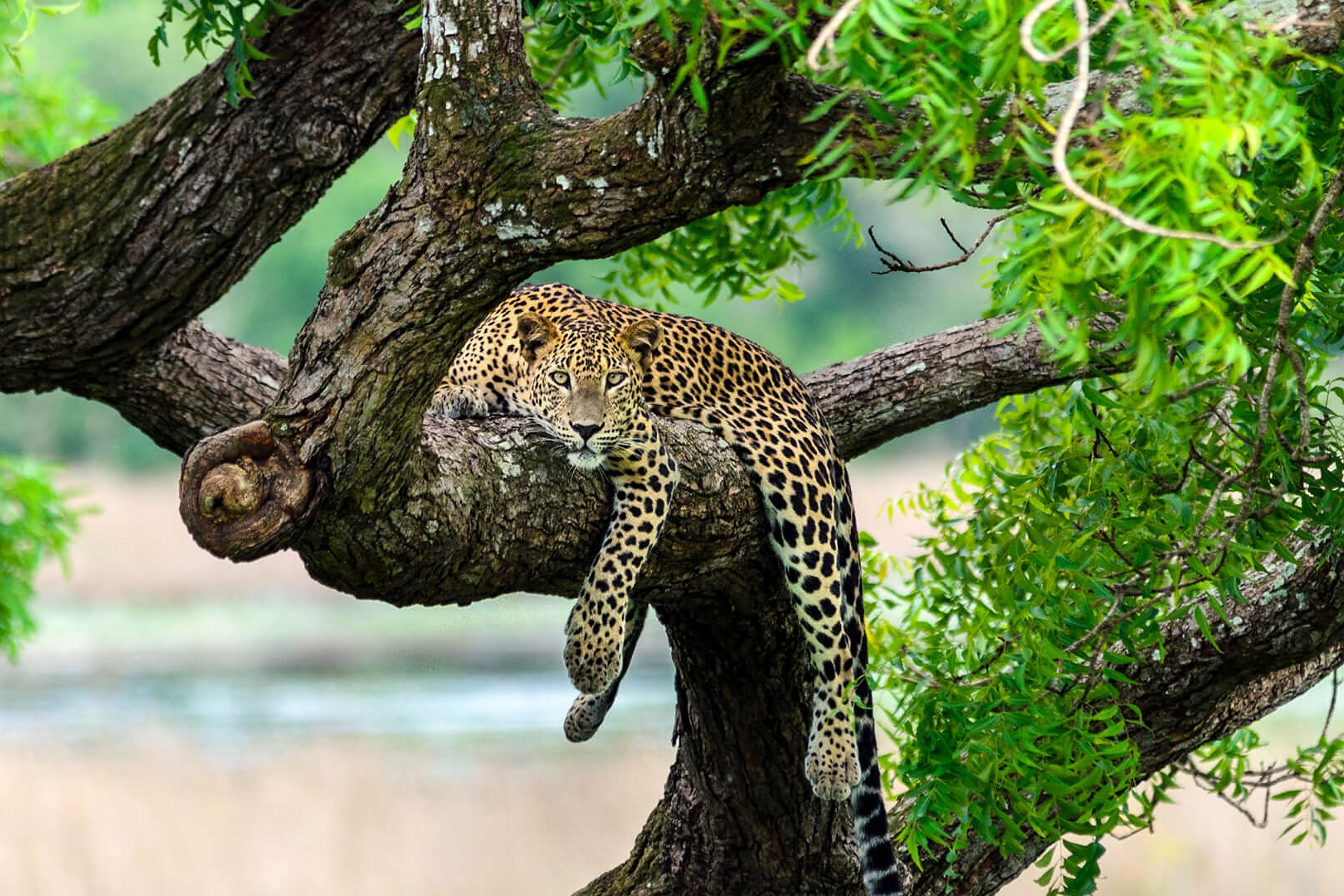
Yala covers approximately 979 square kilometres on Sri Lanka's southeastern coastal plain, divided into five blocks, with Block I renowned for having the greatest density of leopards per square kilometre in the world. With no tigers for competition, Sri Lankan leopards are the island's dominant big cat and appear far more confident in the open than their Indian relatives, sauntering along tracks and sunbathing on rocky outcrops in full view. Beyond the leopards, the park is home to 44 species of mammals, 215 species of birds, and 46 species of reptiles. Kataragama, one of Asia's most significant multi-faith pilgrimage sites, sits just inland. Bundala's Ramsar-listed wetlands border the park to the west. The far south coast, wild and largely undeveloped, stretches east. Yala is a destination that earns every superlative it receives. The question is not whether to come. It is how to do it properly.
Book from a Range of Yala Villas & Camping Cottages by Ceylon Haven
Stays near Yala are built to disappear into the landscape rather than dominate it. You'll find eco villas raised on stilts above the jungle floor, canvas walls and rustic four-poster frames in place of anything more permanent, and natural, earth-toned materials chosen specifically to sit quietly within dry-zone scrub rather than stand out against it.
Comfort here is deliberately understated; the point is never to compete with what's outside the window. Your ideal Yala stay can be a private elevated villa with its own pool, or a classic tented safari camp closer to the ground. At Ceylon Haven, we're ready to help you find the right one from our collection of villas in Yala.
Find the Right Villa: Top Yala Villa Choices Curated by Ceylon Haven
Best Eco Villas in Yala for Private Infinity Pools - Kotiyagala Luxury Eco Villa
Kotiyagala is Yala's genuine villa experience. Twelve eco villas raised twelve feet above the jungle floor, each with its own private infinity pool and ocean-facing views, run on an all-inclusive basis with daily game drives built in. This is the pick for travellers who want the safari experience without giving up villa-level privacy at the end of the day.
Luxury Canvas Villas/Safari Pavilions in Yala's Northern Reaches - Kulu Safaris Yala
Kulu Safaris Yala offers a similarly elevated tented-camp experience with lake views and expert naturalist guides, positioned for travellers exploring the park's quieter northern access points rather than the more heavily trafficked southern entrance. A small villa choice with more wildlife experiences focused.
Frequently asked questions
Check our FAQ for details on this city
Yala National Park is located in the southeast of Sri Lanka, around 20 kilometres southwest of Tissamaharama, with Colombo approximately 300 kilometres away and around five hours by road. From Galle, the journey takes around two and a half hours. From Mirissa or Weligama, allow around two hours. The most common approach is via Tissamaharama, the nearest town and the main logistics hub for safari departures, which sits 20 minutes from the park entrance. Ceylon Haven can arrange private transfers from Colombo, the airport, Galle, or any south coast location, with early morning departure options timed around the park opening to ensure you arrive at the gate before the day heats up.
Yala is home to 44 species of mammals, 215 species of birds, and 46 species of reptiles, with the park's diverse habitats encompassing dry grasslands, scrub, monsoon forests, inland wetlands, and unique coastal mangrove forests and dunes. The five iconic species you can encounter in a single Yala safari are the Sri Lankan leopard, Asian elephant, sloth bear, mugger crocodile, and wild water buffalo. More than 300 Asian elephants live in Yala, though they sometimes roam outside the park in search of food and water. The rare sloth bear is particularly visible in May and June when fruiting palu trees bring them into the open. Langur monkeys, golden jackals, fishing cats, spotted deer, and peacocks round out what is, by any measure, one of the most extraordinary concentrations of wildlife in South Asia.
Nothing in wildlife is ever guaranteed, and any operator who tells you otherwise is not being straight with you. What Yala does offer is the highest probability of a leopard sighting of any national park on earth, because Block I is renowned for having the greatest density of leopards per square kilometre in the world, and many of the younger males have grown so used to their dominance within the reserve and the jeeps that seek them out that they saunter lazily along tracks and sunbathe on rocky outcrops in full view. Early morning safaris in the dry season, with an experienced guide who knows the park's territory and the cats' patterns, produce the best results. Ceylon Haven only recommends vetted guides with strong track records and a genuine understanding of the park.
Yala Block I is the most visited section, renowned for its high density of Sri Lankan leopards, with excellent wildlife viewing that also includes elephants, sloth bears, crocodiles, buffalo, and over 200 bird species across a landscape of forests, lagoons, grasslands, and rocky outcrops. For guests who want a more exclusive experience, Yala Block V offers a quieter, more immersive safari compared to the often-crowded Block I, with the same species present and significantly fewer jeeps. Lunugamwehera National Park, also known as Yala Block VI, features lush forests, lakes, and open plains with fewer vehicles and tourists, making sightings feel more authentic and undisturbed, ideal for those seeking solitude, photography opportunities, and a deeper connection with nature. Ceylon Haven recommends combining blocks across a two or three-day stay for the most complete Yala experience.
Yala National Park is a year-round destination for wildlife safaris, with the most rewarding time to visit during the May to September dry season and in early October, when the onset of drought and dieback of vegetation heightens wildlife viewing as animals concentrate around remaining water sources. The period between February and June is generally considered ideal, with February to July offering dry weather and optimal conditions for leopard sightings and the full range of park wildlife. Block I is accessible year-round, though it may close in September for maintenance, with safaris diverted to other blocks during this period. The park reopens in November, and December through February is peak demand season, so booking accommodation well in advance is essential for this window.
Kataragama is a sacred multi-faith pilgrimage town revered by Buddhists, Hindus, Muslims, and indigenous Vedda communities, with its annual Esala Perahera Festival in July and August among Sri Lanka's grandest celebrations, featuring elephants, fire-walkers, and drummers. It sits just inland from the park and is one of those places that repays a visit even for guests with no particular religious interest, because the cultural intensity of a functioning pilgrimage site of this significance is genuinely unlike anything else in Sri Lanka. The Sithulpawwa Rock Temple, an ancient Buddhist monastery carved into a granite outcrop within the Yala buffer zone, is another site of significant historical and spiritual interest, accessible on the drive to or from the park entrance and well worth the stop.
Bundala National Park is Sri Lanka's first Ramsar-designated wetland sanctuary, home to flamingos, elephants, crocodiles, and over 200 species of birds across shimmering lagoons, salt pans, and sand dunes. Where Yala rewards guests chasing the big five, Bundala rewards those who want a slower, more contemplative wildlife experience centred on birdwatching and the extraordinary diversity of a coastal wetland. Boat trips on the adjacent Tissa Wewa lake in Tissamaharama are particularly recommended for birdwatching, with the lake and its neighbour Deberawewa attractively covered in water lilies and consistently productive for aquatic bird species. The two parks are best combined across a Yala area stay rather than treated as alternatives. Ceylon Haven can structure a programme that makes the most of both.
It is one of the finest wildlife experiences available for families anywhere in Asia, and children tend to find the jeep safari format intensely engaging: the early start, the open vehicle, the anticipation, and the scale of the encounters with elephants, crocodiles, and leopards create memories that are consistently mentioned years later. Children under five enter the park free of charge, with those between five and eleven charged at half the adult rate. The key consideration for families is pace: a private jeep rather than a shared safari gives you control over timing, stops, and the duration of the session, which makes an enormous practical difference with young children. Ceylon Haven arranges only private safari vehicles for all guests, with experienced guides who know how to calibrate the experience for different ages.
The coastline that borders Yala National Park is breathtakingly beautiful and relatively untouched, providing a tranquil contrast to the rugged wilderness of the park. Swimming is not advisable due to strong currents and the presence of wildlife, but the beaches near Yala provide stunning settings for a leisurely walk, a picnic, or simply to relax and enjoy the sunset. Beach and dune walks following animal tracks, star gazing, and turtle and bird watching are particularly rewarding for shore birds along this stretch of coast. The Kirinda Temple, built by King Kavantissa and situated atop a rocky outcrop above the sea, is a short drive from the park and offers some of the most dramatic coastal views on the entire southern shoreline. This is the Sri Lanka that mainstream tourism has not yet reached, and that quality is worth protecting.
Most Yala accommodation operates on a shared safari model: group jeeps, fixed departure times, and an experience calibrated around volume rather than the individual guest. Ceylon Haven's approach is fundamentally different. Every property in the Yala collection is selected for design quality, setting relative to the park, and the standard of private hosting it can deliver. Every safari is arranged as a private vehicle with a guide chosen for track record rather than availability. Every meal is planned around your group rather than a buffet schedule. Yala is Sri Lanka's most popular national park and receives a large number of visitors: the question is not whether to come but how to come. A Ceylon Haven stay means arriving at the gate before the crowd, with the right guide, from the right address. That is the difference between a decent safari and an exceptional one.
The Haven Journal
Your insider guide to Sri Lanka; where to go, what to savour, and how to experience the island like you actually live here.
Our Partner Philosophy
Not every business makes the cut. And that's the point.
Every partner in the Ceylon Haven Passport network is chosen the same way we choose our villas: with care, with discernment, and with you in mind. We look for the places and experiences that feel genuinely Sri Lankan; independent, characterful, and led by people who take quiet pride in what they do.
If it doesn't add something real to your stay, it doesn't make the list.