
Tangalle, Sri Lanka: The South Coast Before the Crowds Arrived
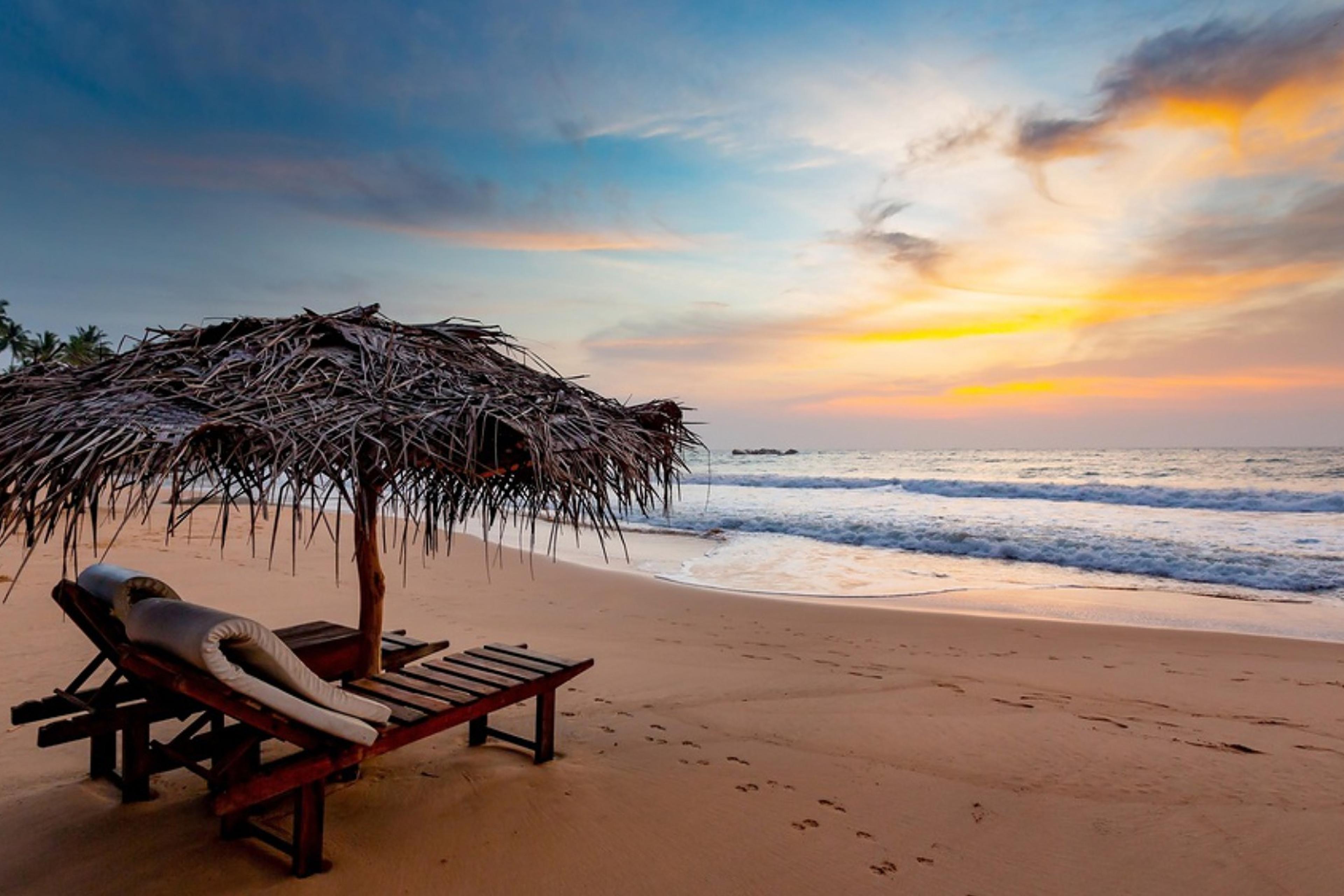
Tangalle takes its name from Ran-gala, the golden stone, and the sand here earns it. Long, quiet beaches run for miles beneath coconut palms, backed by a working fishing harbour that the Dutch and British once used as their anchorage on the southern coast. Inland, the 2,000-year-old Mulkirigala rock temple rises 205 metres above the forest. Up the coast, the Hummanaya blowhole fires seawater 25 to 30 metres into the air. At night, turtles come ashore at Rekawa. This is the south coast before the crowds arrived, and the villas here are built to keep it that way.
Frequently asked questions
Check our FAQ for details on this city
Tangalle sits on Sri Lanka’s far southern coast in the Hambantota District, roughly 195 kilometres from Colombo. By private car, combining the Southern Expressway with the coastal road, allow around three and a half to four hours. From Galle the drive is about two hours, from Mirissa around 50 minutes, and from Matara around 40 minutes. There is no need to rush the journey: the road east of Matara passes through some of the most scenic coastline on the island. Ceylon Haven can arrange private transfers from Colombo, the airport, or any south coast location, with a stop at Mulkirigala or the Hummanaya blowhole on the way if you wish.
Tangalle is a real working town with a harbour, a market, and a Dutch-era fort, surrounded by some of the longest and quietest beaches on the south coast. Mirissa is the whale watching and beach bar hub, and Hiriketiya is the surf and yoga cove. Tangalle sits between them in distance and far apart in atmosphere: broader, emptier, and slower, with a pace set by fishermen and tides rather than a tourist calendar. Its beaches are consistently described as less crowded than those further west, which is why it has long been favoured by couples and honeymooners and by guests who have already done the busier stops.
The area rewards a slow, curious stay. Rekawa Turtle Watch offers a guided night walk to see turtles nesting on the beach. The Hummanaya blowhole in Kudawella, the only blowhole in Sri Lanka, sends spray 25 to 30 metres into the air every few minutes. Mulkirigala Rock Temple, a cave monastery on a 205-metre rock with seven cave temples across five terraces, is a short drive north. Wewurukannala, with its enormous seated Buddha, sits on the same route. Kalametiya Bird Sanctuary is a rewarding morning for birdwatchers, and the old Dutch fort, rest house, and court house in town give a taste of the colonial layer beneath the beaches. A half day combining the blowhole, Wewurukannala, and Mulkirigala is the classic outing.
Tangalle has several beaches, each with a distinct character. Medaketiya is a long, wide sweep of sand ideal for walking and sunsets. Goyambokka is a sheltered, palm-fringed cove with a gentler sea and a few relaxed beach restaurants. Marakolliya is wild, open, and beautiful at dusk, though better for walking than swimming. Silent Beach, between Tangalle and Hiriketiya, is a quiet cove reached by tuk-tuk and prized for its lack of development. Sea conditions vary by beach and by season, and some stretches have strong currents, so Ceylon Haven hosts will always advise on where to swim on the day.
Yes. Rekawa Turtle Watch, established in 1996 by the Turtle Conservation Project, is one of the best places in Sri Lanka to see sea turtles nesting in their natural habitat, and the beach was declared a wildlife sanctuary in 2006. Visits take place at night, guided by trained local watchers who know the beach and the turtles, and the walk is on soft sand in low light. Responsible viewing matters: no flash photography, no touching, and no crowding the turtles, with all guidance coming from the guides on site. Ceylon Haven can arrange a private visit with a trusted local operator, timed around your stay.
Both are among the most memorable day trip stops in the south. Hummanaya, in the fishing village of Kudawella, is a natural blowhole where waves force seawater up through the rock in a roaring plume, named for the “hoo” sound it makes, and best viewed from the cliffside vantage point. Mulkirigala Rock Temple dates back almost 2,000 years, with ancient murals, a reclining Buddha, and cave shrines reached by climbing stone steps up the rock for wide views over the coconut forest and out to sea. In 1826, palm-leaf manuscripts found here helped scholars translate the Mahawamsa, the chronicle of Sri Lankan history. Wear modest clothing and comfortable shoes, and go early to avoid the heat.
November to April is the driest and most comfortable window for beach days, with calm skies and good conditions for the coast and the sights inland. December through February is peak season, and the best villas book early. The shoulder months of March and April are quieter and still reliably sunny. The southwest monsoon from May to September brings rougher seas and more rain, though the landscape turns deep green and the area is quieter still. Turtle nesting at Rekawa continues through much of the year, so a turtle watch is not tied to the peak beach season.
It suits all three, for the same reason: space. Tangalle’s beaches are long and uncrowded, so a private villa here feels truly private, with a pool, a dedicated team, and a chef cooking the morning’s catch on your terrace. Couples and honeymooners get quiet sunsets and candlelit dinners with almost no noise. Families get room to roam, sheltered coves like Goyambokka for calmer swimming, and activities that hold the attention of children, from the blowhole to the turtle walk. Ceylon Haven’s Tangalle properties are selected for generous outdoor space and attentive hosting, and the team can plan around the ages and rhythm of your group.
It is one of the best positioned. Bundala National Park, a Ramsar wetland famous for migratory birds, is within about an hour, and Yala National Park is around two hours east, making a private-jeep leopard safari a very manageable day. In the other direction, Mirissa, Weligama, and Galle Fort are all comfortable day trips, so Tangalle works as a calm anchor between the wilder east and the livelier west. Kalametiya Bird Sanctuary, Mulkirigala, and Rekawa are all close at hand. For guests planning a long south coast stay, a few nights in Tangalle before or after Yala makes a very natural rhythm.
The Haven Journal
Your insider guide to Sri Lanka; where to go, what to savour, and how to experience the island like you actually live here.
Our Partner Philosophy
Not every business makes the cut. And that's the point.
Every partner in the Ceylon Haven Passport network is chosen the same way we choose our villas: with care, with discernment, and with you in mind. We look for the places and experiences that feel genuinely Sri Lankan; independent, characterful, and led by people who take quiet pride in what they do.
If it doesn't add something real to your stay, it doesn't make the list.