
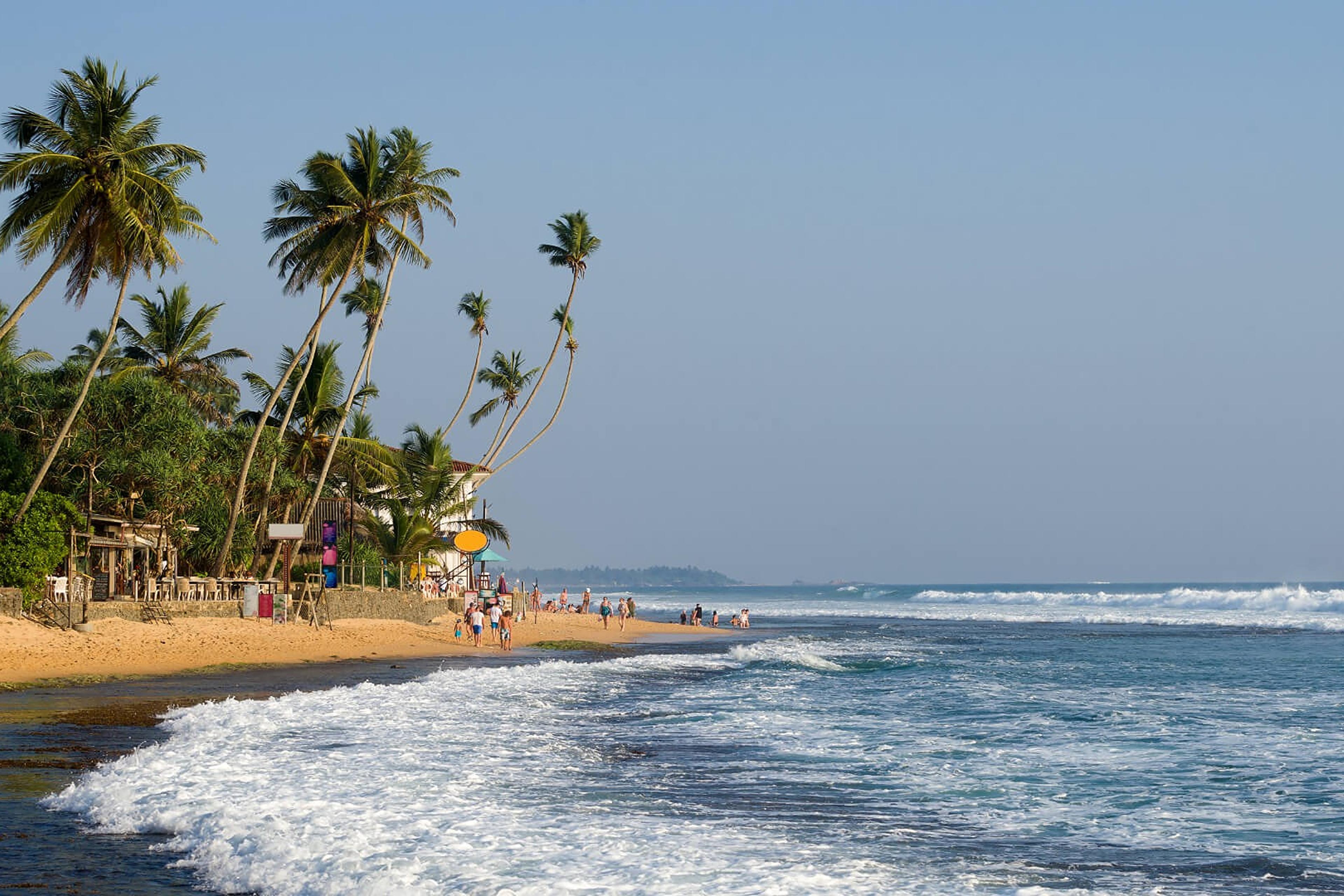
Hikkaduwa, Sri Lanka: The Coast That Started It All
Hikkaduwa has been drawing surfers and divers to this coastline since the 1960s and 70s, making it the south coast's original beach town in the modern tourism sense, long before Unawatuna, Weligama, or Mirissa had developed their own scenes. The reef just offshore, protected as a marine sanctuary, remains one of the most accessible spots on the island for snorkelling straight from the beach, and the town around it has grown into the liveliest stretch of coastline south of Colombo, with a genuine nightlife scene to match its daytime reputation for waves and coral.
A Range of Hikkaduwa Villas by Ceylon Haven
Stays in Hikkaduwa reflect a coastline that's had longer than anywhere else on the south coast to develop its own architectural identity. You'll find multi-storey beachfront builds with ocean-view balconies stacked to make the most of a busier stretch of sand, resort-level villa complexes blending private space with full hotel infrastructure, and a short drive back from the strip; cinnamon-estate retreats where the design turns inward toward garden and greenery instead of the beach.
This is the most varied villa architecture on the south coast, matching a town that's never been just one thing. Your ideal Hikkaduwa villa can be right on the beachfront, within a resort-style complex, or tucked into a private estate nearby. At Ceylon Haven, we're ready to help you find the right one from our collection of villas in Hikkaduwa.
Find the Right Villa for Your Hikkaduwa Holiday: Top Choices by Ceylon Haven
Hikkaduwa's built-up energy means the strongest stays here either lean into beachfront scale or step back from the main strip entirely. Our collection covers both ends of that spectrum.
Best Beachfront Villas in Hikkaduwa for Groups by CH - The Beach Home Rillamba
The Beach Home Rillamba is a grand, multi-storey beachfront villa with ocean-view balconies and full staff, built for a group that wants direct access to Rillamba's stretch of coastline without giving up any privacy along the way.
A Design-Led Retreat Away from the Beach Strip - The Niche Villa
For something quieter, The Niche Villa is ideal. The architecture gives away a vibe that is straight out of a movie.Open sided garden pavilions looks heavenly when lit at night, the glistening pool that belnds into the blue horizon of the sky and the lake beyond. Sitting right within a private cinnamon estate just minutes from Hikkaduwa's surf beaches, the pick for travellers who want the reef and the breaks nearby, without staying directly on the busier stretch of coast.
Frequently asked questions
Check our FAQ for details on this city
Hikkaduwa is located in the Southern Province of Sri Lanka, approximately 17 kilometres northwest of Galle and 98 kilometres south of Colombo. By car via the Southern Expressway, the journey from Colombo takes around 90 minutes. The coastal train from Colombo Fort runs directly to Hikkaduwa station, with the journey taking approximately two and a half hours, tracing the shoreline through Wadduwa, Beruwala, Bentota, Balapitiya, and Ambalangoda with open-window sea views throughout. Hikkaduwa sits on the Colombo to Galle coastal train line, with a railway station providing convenient transportation options directly into the centre of town. Ceylon Haven can arrange private transfers from Colombo, the airport, Galle, or any south coast location for all guests.
Hikkaduwa is one of Sri Lanka's most famous coastal towns, known worldwide for its vibrant beach scene, coral reefs, and nightlife, offering stunning views and beautiful beaches that attract travellers seeking both relaxation and adventure. It is busier, noisier, and more developed than destinations like Balapitiya or Ahangama to the south, which is precisely its appeal for guests who want energy, variety, and the most developed tourism infrastructure on this stretch of coast. The beach strip runs for several kilometres with cafes, bars, surf schools, and dive centres lining the shore. Beach restaurants and bars, shops, and nightclubs provide the background for a carefree stay, and the surrounding area rewards those who explore beyond the main strip with quieter coves, lakes, and a cultural landscape that reflects the town's roots as a fishing community.
The reef around Hikkaduwa is among the most diverse and accessible on the southern coastline, located close to the main road in generally calm, shallow water, with around 60 species of hard coral and over 170 species of reef fish recorded within the protected area. It is worth approaching with honest expectations: the health of the coral has been a concern for some time, and the breathtaking coral gardens depicted in older media may not be what you find today, though diverse fish species and sea turtles remain regularly sighted. Deeper dive sites including Kiralagala, Godagala, and Black Coral Point provide excellent opportunities for underwater exploration beyond the shallow reef, and the shipwrecks offshore have matured over decades into thriving artificial reefs. For snorkellers, a glass-bottom boat tour offers a gentler introduction to the reef without requiring diving experience. Always use reef-safe sunscreen and never touch or stand on the coral.
Hikkaduwa was the starting point for the recreational dive industry in Sri Lanka, and its combination of shallow reef, deeper rock formations, and offshore wrecks makes it one of the most complete dive destinations on the island for divers of all levels. The two most celebrated wreck sites are the British tanker Conch and the Earl of Shaftesbury, both accessible on guided boat dives and now home to rich marine communities that have colonised the hulls over decades. Sir Arthur C. Clarke, author of 2001: A Space Odyssey, owned and operated a diving station in Hikkaduwa, lending the area a literary and historic association that goes beyond the recreational. PADI-certified courses are available through several dive centres in town, and the season for the best underwater visibility runs from November through April.
Hikkaduwa has several different surf spots with shallow sand-bottomed waves, A-frame sections, harbourside waves, mellow whitewash to practise the pop-up, and fast left-hander waves, attracting thousands of surfers between October and April. The four main breaks, from north to south, provide options for different ability levels within the same stretch of coast. Beginners will find the whitewash and mellow sections forgiving, while more experienced riders target the faster lefts and the A-frame peaks. The surf community here is well established and internationally mixed, with schools, board rentals, and experienced local instructors readily available. Narigama Beach, extending three kilometres south, is broader and calmer with several surf spots and luxury hotels along its length, offering a quieter alternative to the busier northern beach strip for guests who want the surf without the crowd concentration.
Hikkaduwa is famous for its nightlife, with an organised rotation system where only one nightclub hosts the main party each night on a fixed weekly schedule, preventing the fragmentation of the crowd and keeping the energy concentrated. This results in a nightlife scene that feels alive in a way that many Sri Lanka beach towns cannot replicate, with a genuinely international mix of travellers, surf community regulars, and local party-goers filling whichever venue holds the night's rotation. Beyond the clubs, the beachside bars are lively throughout the evening season, with sundowner culture well established along the strip. For guests who prefer a quieter evening, the Narigama end of the beach and the area toward Dodanduwa offer a noticeably more relaxed atmosphere, and Galle Fort's restaurant and bar scene is 17 kilometres south for those who want sophisticated drinking in a UNESCO heritage setting.
More than most visitors plan for. Sea turtles are regularly spotted near shore, especially early in the morning, with Turtle Beach offering consistently reliable sightings of green sea turtles swimming close to the shore where they feed. Hikkaduwa Lake, just inland from the beach, offers boat tours through a quieter, wildlife-rich freshwater landscape that contrasts sharply with the energy of the main strip. The Ambalangoda Mask Workshop and Museum nearby showcases the rich cultural history of Sri Lankan mask-making and demon exorcism rituals, one of the most distinctive traditional crafts on the island and worth a dedicated half morning. The Tsunami Honganji Viharaya, a Japanese Buddhist temple built in memory of those lost in the 2004 tsunami, adds a moment of reflection and architectural beauty to the beach town experience. Galle Fort, with its UNESCO heritage streets and the island's finest restaurant scene, is a 25-minute drive south.
Yes, with a few practical considerations. The coral reef's shallow, calm lagoon section is accessible and safe for children, with glass-bottom boat tours providing an engaging underwater experience for those too young to snorkel independently. Turtle Beach, where sea turtles are regularly spotted close to shore in shallow, calm water, is consistently a highlight for children and tends to become the most talked-about experience of a family's entire south coast trip. The busier sections of the main strip can feel overwhelming for very young children in the evenings, so staying at the calmer Narigama end of the beach is strongly recommended for families. The town is best suited to beach lovers, divers, nightlife seekers, families, and more advanced surfers, and the breadth of that range means it accommodates different ages and interests within the same stay.
November to April is the optimal window for Hikkaduwa, when calm seas, great weather, and the best conditions for outdoor activities including reef snorkelling, diving, and surfing all converge. This is also when the underwater visibility on the reef is at its clearest and the surf season is running at full pace. December through February is peak season and the period of highest villa demand, with the main strip at its most energetic and all activities fully operational. The surfing in the Hikkaduwa region gets its best conditions during the dry season from November to March. The southwest monsoon from May to October brings rougher seas, reduced underwater visibility, and a quieter town, with many restaurants and surf schools reducing operations during this window. Out-of-season stays are quieter and cheaper, but the reef and surf are considerably less rewarding.
Hikkaduwa's accommodation landscape is dominated by guesthouses, surf camps, and large beachfront hotels built for volume. A Ceylon Haven villa is a fundamentally different proposition: exclusive use of a thoughtfully designed property, your own pool, a kitchen team working with the morning's catch from the local harbour, and a level of privacy that the main strip simply cannot provide. Narigama, the upscale southern end of the Hikkaduwa area, borders a calmer stretch of Narigama Beach, with only the finest hotels in the district located here, and several Ceylon Haven properties are positioned in this quieter end of the coast. The reef, the surf, the turtles, the nightlife, and Galle Fort are all still within easy reach. The difference is having the right address from which to engage with all of it on your own terms.
The Haven Journal
Your insider guide to Sri Lanka; where to go, what to savour, and how to experience the island like you actually live here.
Our Partner Philosophy
Not every business makes the cut. And that's the point.
Every partner in the Ceylon Haven Passport network is chosen the same way we choose our villas: with care, with discernment, and with you in mind. We look for the places and experiences that feel genuinely Sri Lankan; independent, characterful, and led by people who take quiet pride in what they do.
If it doesn't add something real to your stay, it doesn't make the list.